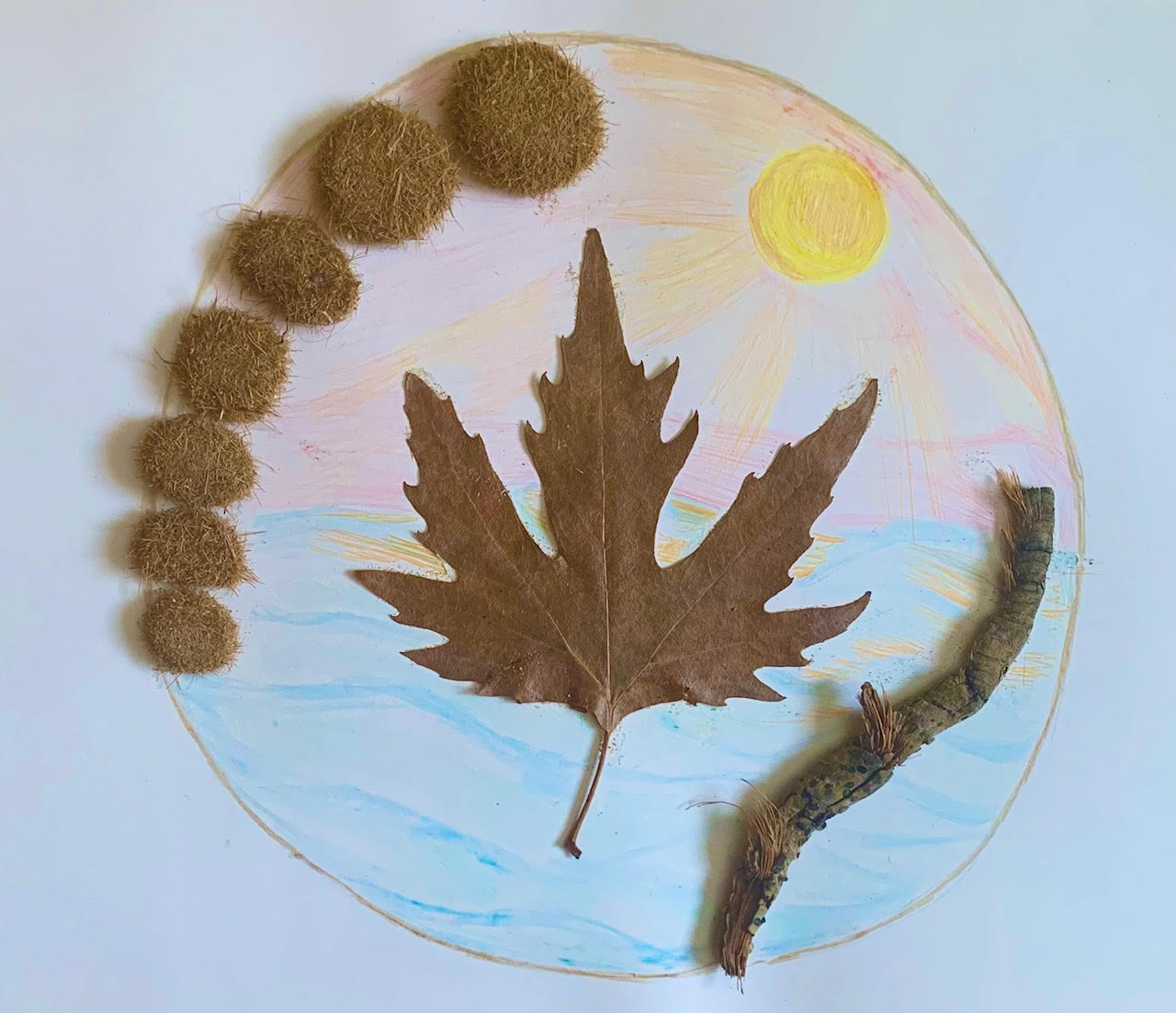
The Anthroposophical Twelve Senses
To create more concrete tools for working with nature in dramatherapy, the research focuses on using the senses. Specifically, the anthroposophical theory of the twelve senses, which offers a broader framework.
At Leiden University of Applied Sciences there is a program called Anthroposophically Inspired Creative Therapy (AG).
Anthroposophy is a modern social movement that emphasizes the connection between the spiritual dimension of human beings and the spiritual dimension of the world (Anthroposophical Association Netherlands, 2023).
Anthroposophy recognizes twelve senses, which are explained below (Soesman, 1998).
The Twelve Anthroposophical Senses
Physical senses
Touch sense
Feeling through the skin: textures, materials, and firmness. This sense makes us aware of the boundary between our body and the outside world.
Life sense
We mainly notice this sense when it is threatened—for example hunger, needing to urinate, or fatigue.
Sense of movement (proprioception)
Feeling from within how the body moves and knowing the position of the body. This is an internal sense because stimuli come from inside the body.
Balance sense
The control of muscles to remain balanced. Works closely with the eyes. If the world moves or you are unstable, balance is disturbed.
Soul senses
Smell
Perceived through the nose. Scents from the outside world fill the body. We cannot avoid smelling because we must breathe.
Taste
The mouth is the gateway through which something from outside enters. Taste is connected with texture (touch) and warmth (temperature sense).
Sight
Perceived through the eyes. A dominant sense allowing us to perceive colors, textures, perspective, and more.
Temperature sense
The sense that allows us to feel warm and cold—for example wind on the skin, an object in the hand, or sunlight.
Spiritual senses
Hearing
Through the ears we take in the environment. This sense plays an important role in communication.
Language sense
Also called the speech sense: understanding language and sounds used to communicate and express internal experiences.
Thought sense (imagination sense)
Everything present in speech that is not contained in the words themselves—intonation, expression, images, and imagination.
Sense of self (I-sense)
Recognizing the difference between “I” and “you.” Empathy plays an important role here: understanding another person while knowing you are not that person. This is considered the most complex sense.
Relevance of Using the Senses
As mentioned earlier, stimulating the senses helps people connect with both their inner world and the outside environment. This allows clients to be more present in the here and now.
Through our senses, we can only perceive what is happening in the present moment, but sensory stimuli can also trigger memories. It is important for therapists to be attentive to what the client perceives, so they can recognize when a memory is activated. These memories can then be given a place in therapy.
Our brains are programmed to attach judgments to sensory experiences—we label things as beautiful or ugly, pleasant or unpleasant, soft or rough, sweet or sour. This gives clients the opportunity to simply be with both pleasant and unpleasant sensations. The goal is not necessarily to make something like rain enjoyable, but to help clients experience it more neutrally.
Exercise Example 1
Title: Sensory association – warm-up
Goal: Connecting with the senses and the environment
Materials: A natural environment rich in different elements
Senses: Touch, sight, hearing, taste, temperature
Description:
Person A walks to an object in nature (e.g., a stone) and describes it: “a stone is hard, like bark.” Then they walk to a tree and touch its bark.
Person B continues with another comparison: “bark is brown, like soil.”
Person A then touches soil and says: “soil is wet, like a leaf.”
This creates a chain of associations using natural elements. The therapist can observe which senses the client uses most or least and encourage the use of other senses. The client can also be encouraged to take more time with each element or increase the pace if they get stuck.
Variation:
Can be done in groups, with a set order or allowing participants to take turns when they think of something.
Exercise – Example 2
Title: “Nibble, nibble, little house”
Goal: Stimulate touch and imagination
Materials: A natural environment with various elements
Senses: Touch, imagination, sight, language
Description:
The client builds a small house for a fantasy creature (e.g., a troll or fairy). They walk around to find a suitable spot and gather materials:
• sticks and stones for the foundation
• small branches and moss for the roof
• feathers and shells for decoration
After building, the client creates a story about the creature living in the house.
The therapist observes whether the client focuses more on structure (foundation) or details.
Variation:
Instead of a fantasy creature, the house can be built for an insect or animal, making it more concrete for clients with less developed imagination.
Example Working Methods
Research shows many benefits of using sensory experiences in nature within a drama therapy framework. Two example methods are described above.
Conclusion
This article presents findings from a graduation research project on the role of nature in drama therapy, focusing on stimulating the twelve senses.
Results show that nature can be a valuable addition to therapy—not only for clients but also for therapists. It provides a pleasant environment, encourages movement, and supports mental well-being for both parties.
Nature can also function as a tool: using natural materials and applying anthroposophy can lead to new therapeutic approaches.
The study identifies three levels at which nature can be used in drama therapy, along with considerations such as weather conditions and privacy. It highlights the diversity of natural environments—from small parks to large natural areas.
Focusing on the twelve senses gives therapists concrete tools to apply sensorimotor play, helping clients become more present in the moment and accept sensory experiences without judgment.
Ires Van Der Eijk, I. (2025). Zin in natuur [Sense in Nature] (translation by Daria Egorova). Tijdschrift voor Vaktherapie.