Autism is often not immediately visible in the early years, especially if a child is the firstborn. Many parents only hear about it later—during preschool assessments or specialist evaluations. And when that moment comes, it can feel overwhelming.
There may be fear, confusion, and a deep sense of uncertainty about the future. Thoughts about how life “was supposed to be” may clash with a new reality. Questions arise. Worries grow. Sometimes, there is even a painful search for reasons and a tendency to blame oneself.
In moments like these, it is important to remember: parents are not alone in these feelings. And most importantly—they deserve support, understanding, and care just as much as their child does.
It may not feel this way at first, but this is not the end of something good. It is the beginning of a different path—one that can also be meaningful, full of growth, and even joy.
If a child is healthy, that alone is already something deeply valuable. In the rush of everyday challenges, it is easy to forget this simple truth—but it matters.
Every Child Has Their Own Path
Children with autism are incredibly unique. Many of them have special talents, deep interests, and ways of seeing the world that can be truly remarkable. With time, patience, and the right support, they can find their place in life.
Some thrive in structured environments like programming or technical fields. Others, like Temple Grandin, find their voice in more specialized areas. Each journey is different—and that’s okay.
There are also many approaches that can help build communication and understanding. One of them is ABA therapy, which focuses on gently observing a child’s behavior and learning what stands behind it.
It helps to notice:
- how a child tries to get attention
- how they avoid something uncomfortable
- what brings them sensory comfort or stimulation
This is not about “fixing” a child, but about learning their language and building connection step by step.
The Gentle Support of Visual Therapy
Alongside structured methods, there are softer, more intuitive ways to support a child—and visual therapy is one of them.
Sometimes, words are simply too difficult. And that’s okay. Through images, colors, textures, and simple creative activities, a child can express feelings that cannot yet be spoken.
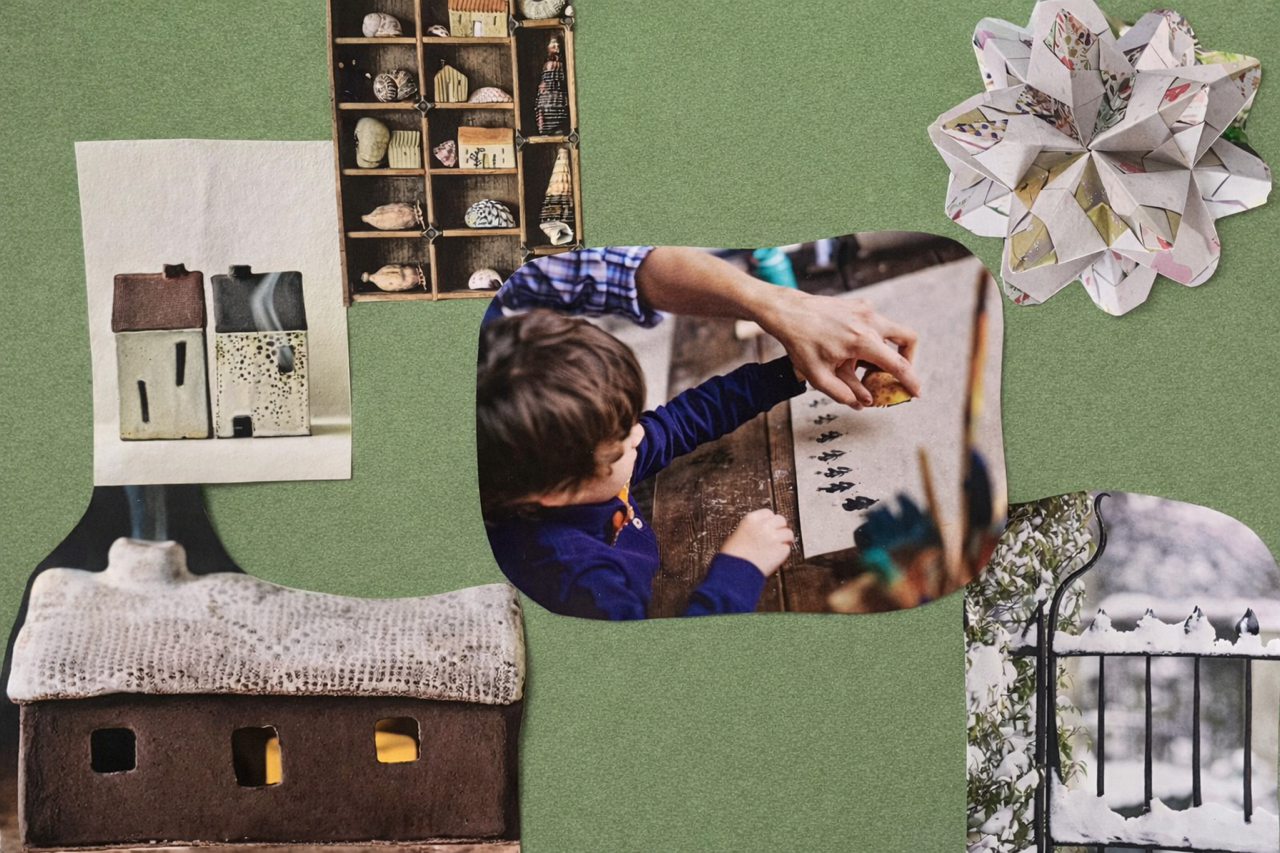
Drawing, making collages, playing with shapes or materials—all of this creates a safe space where there is no pressure, no right or wrong.
Why Visual Therapy Can Be Helpful
- It allows expression without pressure — feelings can come out naturally, without needing words
- It brings calm and comfort — repetitive, creative actions can soothe anxiety
- It helps build connection — creating something together can become a shared language
- It supports focus and engagement — visual tasks can gently hold attention
- It celebrates individuality — every creation is unique, just like the child
Most importantly, it reminds both the child and the parent that there is still joy, creativity, and connection—right here, in the present moment.