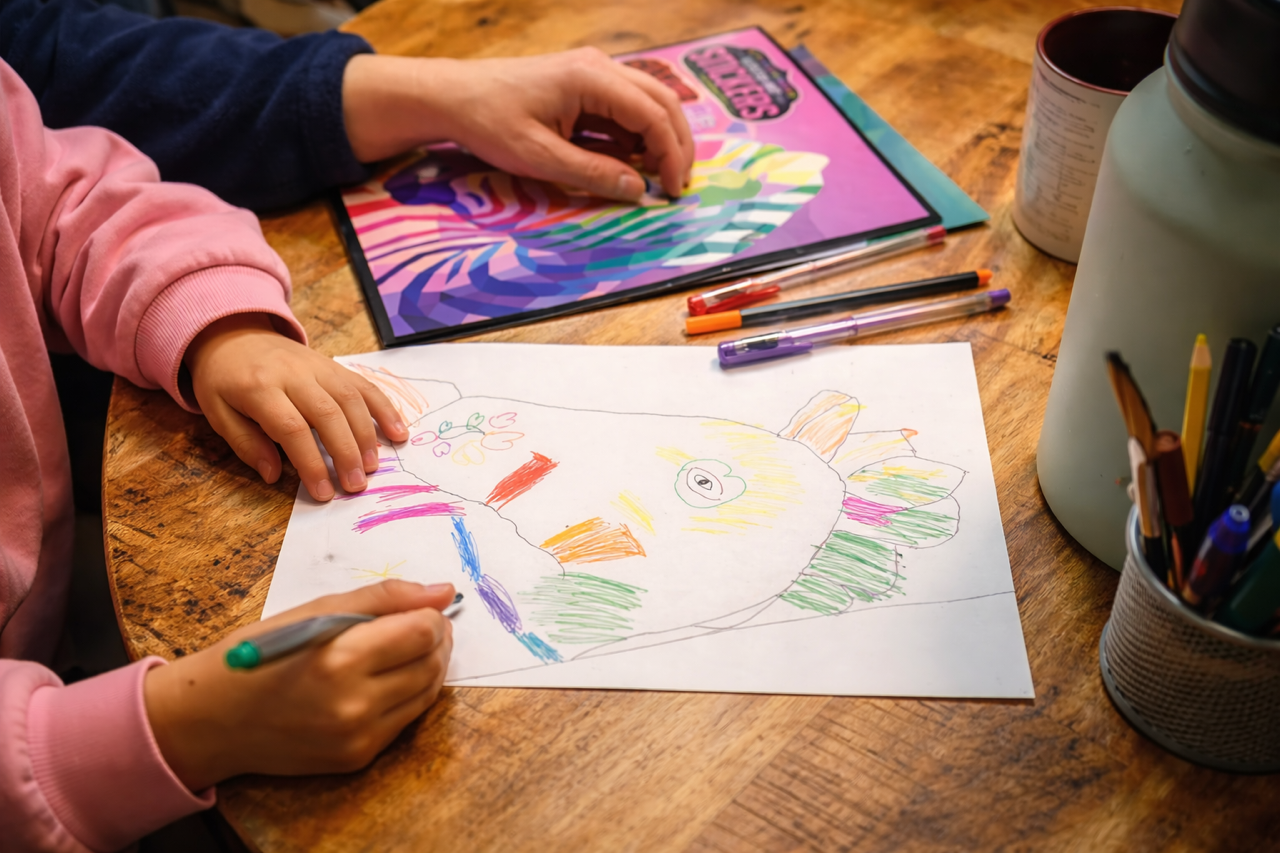
First of all, let’s have a look what causes stress in children? Many parents still feel unsure about how to avoid putting their child under stress. It’s not always obvious, and often the reasons are hidden in everyday routines.
Here are some common factors that can increase stress levels in children:
- an unbalanced daily schedule (for example, demanding mental tasks are better placed earlier in the day, while physical activity is often insufficient);
- lack of freedom to move and be active;
- not enough time outdoors;
- poor nutrition or irregular eating habits;
- lack of a consistent sleep routine;
- overly strict or authoritarian communication, with little emotional warmth or attention;
- limiting a child’s freedom without explanation;
- intellectual or physical overload;
- an uncomfortable social environment or lack of personal space.
Of course, it is always better to prevent stress than to deal with its consequences later. Becoming more aware of these everyday factors can already make a big difference.
Supporting Your Child Gently
Parenting doesn’t require perfection. What matters most is attentiveness, flexibility, and care. Small changes—like adding more outdoor time, softening communication, or creating predictable routines—can significantly improve a child’s emotional well-being.
The Role of Art Therapy
Even with the best efforts, stress can still appear—and that’s completely normal. This is where gentle tools like art therapy can provide meaningful support.
Art therapy offers children a safe and natural way to express their feelings, especially when words are hard to find.
Benefits of Art Therapy for Children
- Emotional release — helps children express feelings they cannot yet explain
- Stress reduction — creative activities calm the nervous system
- Better self-regulation — children learn to process emotions more safely
- Improved communication — art becomes a bridge between child and parent
- Increased confidence — there is no “right” or “wrong,” which builds self-esteem
- Stronger parent-child connection — creating together fosters trust and closeness
Art therapy doesn’t require special skills or materials. Sometimes, a few colors, paper, and a calm moment together are enough.