
Mental health difficulties rarely appear suddenly. More often, they begin with stress, emotional overload, and subtle internal imbalance. When these early signs are noticed and supported in time, it is possible to prevent a deeper decline and restore a healthier sense of balance.
Figure 1: from normal functioning to accentuation and pathology
The figure illustrates how stress may gradually move a person from a normal state into an accentuated zone. This is not yet pathology, but it is a clear sign that something is no longer fully in balance.
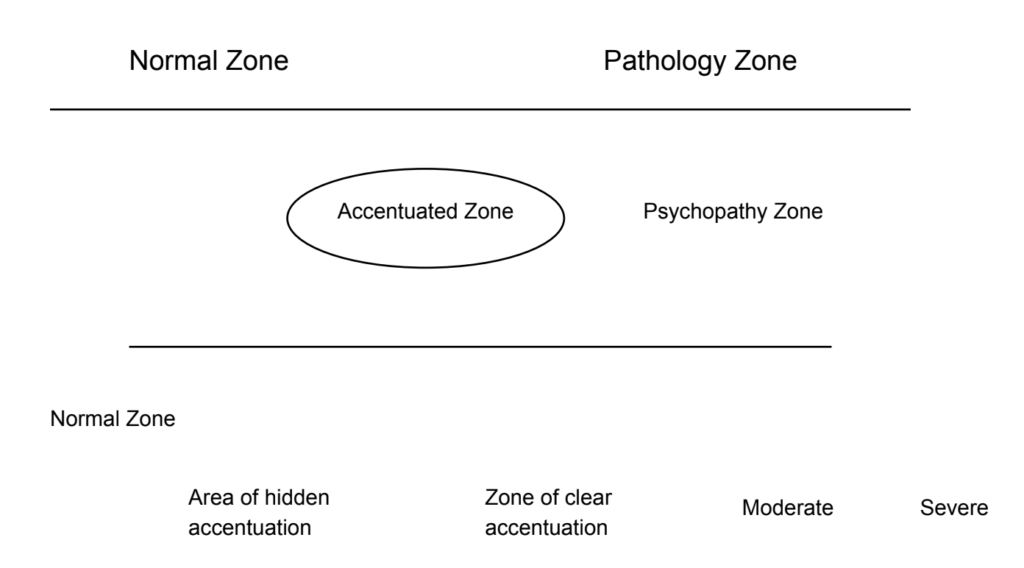
The accentuated zone: a critical moment for prevention
The accentuated zone can be understood as an early warning stage. A person may still be functioning in everyday life, yet internally they may feel increasingly overwhelmed, emotionally reactive, disconnected, or mentally exhausted. At this point, the difficulty is not yet clinical pathology, but it signals that the nervous system is under pressure.
This is exactly why prevention is so important. When support is offered early, it becomes possible to respond before symptoms deepen and before emotional strain develops into a more severe and persistent condition.
How visual arts can help
Visual arts offer a gentle and effective way to support mental health prevention. Unlike approaches that rely only on words, creative work makes it possible to process emotions in a non-verbal and often more accessible way. Through drawing, collage, and other visual methods, people can externalise what they feel, organise inner experiences, and gradually create a sense of clarity and structure.
Working with images, colours, shapes, and composition engages both emotional and cognitive processes. This can help reduce mental overload, slow down anxious thinking, and create a calmer internal state.
Prevention as a form of care
Prevention is not only about avoiding pathology. It is also about recognising vulnerability early, responding with care, and creating space for recovery and growth. The accentuated zone, as shown in the diagram, is a meaningful point for intervention — a stage where support can still gently redirect the process toward resilience rather than deterioration.
Visual arts can play an important role in this process by helping individuals stabilise their emotions, reconnect with themselves, and strengthen self-awareness before difficulties become more severe.